Many AI projects stall, and the model is rarely the reason. The data underneath is locked in systems, out of date, unclear about who may see what, and stripped of the context needed to read a position or a trade.
- Who we serve
Who we serve
- Solutions
Solutions
- Company
The financial operating layer for AI

A governed, domain-aware layer between your AI and your investment data, so AI can understand your business and act on it.
AI capabilities, independently recognised across capital markets:


Agents running in production today
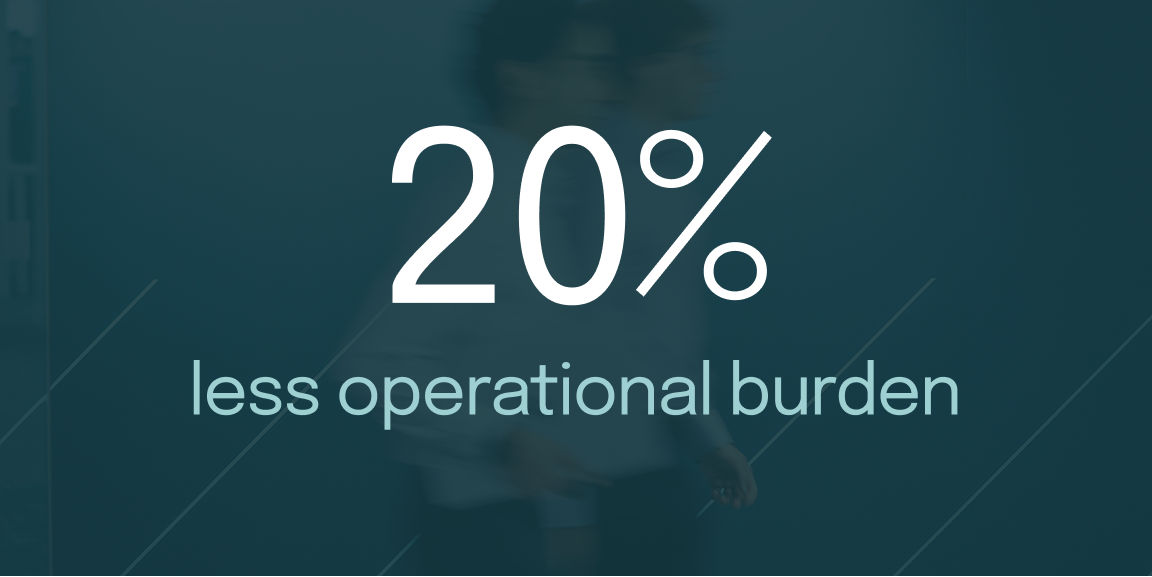
Omba Advisory & Investments runs FINBOURNE agents across its daily operating cycle, from reconciliation and data quality control to valuation production and portfolio commentary. Omba reports a reduction of more than 20% in operational burden since the agents went live.
…move from design to production in weeks instead of a lengthy pilot purgatory cycle.
David PiersonCo-founder & Director

Why AI stalls in financial services
Locked systems Stale data Entitlements Domain understanding TraceabilityA data warehouse stores data well, but it does not carry investment-specific models or point-in-time history. An AI reading from it has to infer what a position or a trade means.
Between your AI and your data
Your AI agents & assistants
Claude Claude Code Github Copilot Candela (FINBOURNE agentic layer)CONNECT THROUGH MCP, the governed door financial operating layerLive data. Entitlements applied. Every call audited.
Your AI calls governed APIs and never queries your databases directly.
 850+ APIs
 Governed
 Bi-temporal
 Domain-aware
 Audited
READS AND WRITES
Your data & systems
Market data, OMS, PMS, fund accounting, custodians, warehouses





MCP is an open standard for connecting AI tools to data and applications. Through FINBOURNE, every MCP call is checked against your entitlements and logged.
What makes a financial operating layer?
A financial operating layer is the governed layer between AI and investment data that gives AI domain context, applies entitlements, and records every action. Getting a model to answer a question is straightforward. Getting it to answer correctly about a fund hierarchy or a restated position depends on the platform underneath
Domain context
The financial concepts your AI needs to reason about, encoded in the layer itself. Gives AI the financial understanding generic context layers can’t.
API-first
Every read, write, and workflow is exposed as a composable API call, with identity, parameters, and entitlements logged at platform level. FINBOURNE exposes the actions investment teams take, not just the data.
Human-in-the-loop
Actions that change data or cost money are routed through your existing approval flows, whether a person, a script, or an agent triggers them. An agent can propose a change. Only a person can approve it.
AI agents for research, oversight, and automation
Three categories of agent, each a different way to put the financial operating layer to work. Every action an agent takes has lineage, which is why teams can trust the result.
Research
Live positions, market data and news, grounded in your book, not a snapshot.
Morning summary, portfolio management, ESG, manager screening
Last line of defence
Systematic oversight of operations, compliance and risk on live data, flagging exceptions before they become incidents.
NAV control, data quality, reconciliation, portfolio health, market risk
Automation
Run end-to-end workflows on the same governed data your team uses.
NAV production, valuations, portfolio rebalancing, fund prospectus generation, data manager agent
SEE OUR AI CAPABILITIES IN ACTIONFrequently asked questions
How do you let AI agents access sensitive investment data without losing control over it?
AI agents only see the data a human in the same role would be allowed to see. On FINBOURNE’s platform, every AI query runs through the operating layer as an API call, applying the same permissions and entitlements that already govern your team, so an agent can request live portfolio data but cannot see across mandates it is not authorised for. Every one of those requests is logged, and control comes from applying your existing governance to AI rather than building a separate set of rules for it.
Can AI agents work across existing systems like Bloomberg, Aladdin or SimCorp without ripping them out?
FINBOURNE’s AI layer plugs into the systems already running your business, including order management, portfolio management, custodians and market data feeds, rather than requiring a rip-and-replace migration. AI agents and your existing stack read from and write to the same governed data, so you can add AI capability without retraining teams on a new interface or duplicating your data estate.
How do you keep an audit trail when AI agents take actions like NAV checks or rebalancing?
Every action an AI agent takes, such as a NAV check, a rebalancing step or a data query, is logged with an audit trail as if a person had done it. On FINBOURNE’s platform, all actions run as an API call through the operating layer, and anything that touches live data, like a transaction, is routed through the same approval workflow used for any human user. That’s what turns the AI action into a fully auditable event.
What makes an investment data platform AI-ready?
An AI-ready investment data platform understands financial concepts such as instruments, positions and entitlements with a bi-temporal history. That awareness is what lets an AI agent reason about a portfolio correctly instead of guessing, because the platform already knows what a position or trade means. FINBOURNE’s platform is built with that financial context already encoded, rather than layered on top of generic cloud storage.
See it on your data
FINBOURNE connects to the systems and AI assistants you already run. There is no new interface to learn, no separate AI platform to buy. and nothing to rip out.
- Solutions